
Short answer
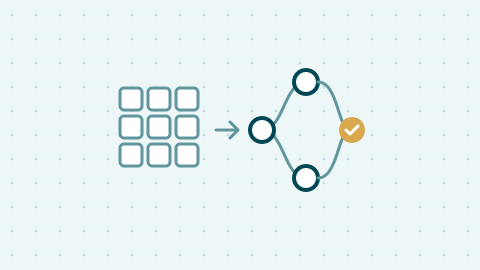
Replace email and spreadsheet approvals in four steps: map how requests really flow today, agree the stages, owners and approval rules, move the process into one workflow where every request has a single record and a visible status, then retire the old channels. The tool matters less than the design. A workflow that copies a confused email chain will still be confused.
Why are email and spreadsheet approvals a problem?
Email and shared spreadsheets are where most approval processes start, and for a small team they work. As volume grows, the same problems tend to appear, whatever the industry:
- No single record. The request, the quotes, the comments and the approval live in different threads and files.
- No status. Nobody can see where a request is without asking, so people chase.
- Weak evidence. An "OK, go ahead" reply is hard to link to the transaction and easy to forward out of context.
- Version confusion. Several copies of the tracker spreadsheet disagree.
- Bypasses. Urgent requests skip the process by phone or chat, and nobody records why.
These are process problems before they are technology problems. That is why the approach below starts with the process.
Why move approvals into a workflow now?
Digital processes are becoming the expected norm. In Mauritius, the Budget 2026-2027 speech of 19 June 2026 placed "Leveraging AI and Digitisation" as the first of its strategic pillars and announced that Government and the private sector would train 25,000 Mauritians in practical AI skills over the next year (Budget Speech 2026-2027; MCCI budget highlights). The Electronic Transactions (Amendment) Act 2026, passed in May, adopts a reliability-based, technology-neutral standard for electronic signatures, and will come into operation on a date fixed by Proclamation (Act No. 5 of 2026; Bill No. V of 2026). Tax authorities, including the MRA, are moving invoicing into real-time digital systems in stages (MRA).
Wherever you operate, the direction is the same: approvals and records that can be shown, traced and trusted without a pile of emails.
Update, 25 September 2026: the Electronic Transactions (Amendment) Act 2026 came into operation on 25 September 2026 (Laws of Mauritius).
How do you replace email approvals, step by step?
- Pick one process. Purchase requests, supplier onboarding, quality non-conformities, leave or expense claims. Choose one that is frequent and painful.
- Map it as it really runs. Follow five or six recent requests from start to finish. Note every hand-off, wait, rework and side channel.
- Agree the stages. For example: requested, reviewed, approved, ordered, received, closed. Each stage has one owner and a clear exit condition.
- Write the rules. Who approves what, up to which amount, what evidence is required, and what happens when an approver is away. Our guide on controls before automating approvals covers this.
- Design one record per request. One form holds the request, attachments, comments and decisions. Status is visible to everyone who needs it.
- Choose the tool last. Many businesses already own a capable tool inside their accounting, ERP or office software. Buy something new only if the design needs it.
- Pilot, then switch off the old way. Run with one team, fix what is awkward, then stop accepting approvals by email. If both channels stay open, people use the old one.
- Measure. Compare cycle time, chasing and errors with the baseline you took in step 2.
What should a good approval workflow show?
| Feature | Why it matters |
|---|---|
| Single record per request | Everything about the request is in one place |
| Visible status and owner | Ends chasing; shows where work waits |
| Rules-based routing | Approvals follow the matrix every time |
| Audit trail | Who did what, when, and what changed |
| Reminders and escalation | Stuck items move without phone calls |
| Simple reporting | Cycle times and bottlenecks, without building a spreadsheet |
How do you bring people with you?
People keep using email because it is familiar and fast for them, even if it is slow for everyone else. Explain the change in terms of what they gain: no more chasing, clear status, fewer lost requests. Involve the main requesters and approvers in the design, keep the form short, and make the first weeks easy with a named person to help. Most of all, leaders must approve in the workflow themselves from day one.
What usually goes wrong?
Three things. Teams digitise every exception on day one and make the form too complex, so keep the first version simple. Managers keep approving by email "just this once", so leaders have to use the workflow themselves. And nobody owns the process after go-live, so name an owner who reviews it monthly. These are design choices, which is why choosing and fixing the process first matters.
Update, 30 June 2026: the MRA's e-invoicing stage for taxpayers with turnover above MUR 80 million is now listed as launched (MRA).
Update, 1 September 2026: the MRA stage for taxpayers above MUR 40 million launched, and in France all companies must now be able to receive e-invoices, with large and mid-sized companies also required to issue them (MRA; impots.gouv.fr). If invoices still depend on email approvals upstream, start there. See is your business ready for e-invoicing?
Linkgrow's process redesign service maps and redesigns approval processes before any tool is chosen. Try the free gap finder for a first view.
Frequently asked questions
What is the best tool to replace email approvals?
The one that fits your designed process and your existing systems. Many accounting, ERP and office suites already include approval workflows; check those before buying something new.
Can a spreadsheet be a good enough approval tracker?
For low volumes and a small team, sometimes. Once several people need status, evidence and an audit trail, a workflow with one record per request is more reliable.
How long does it take to move an approval process into a workflow?
It depends mostly on how clear the process and rules are. Mapping and agreeing the design usually takes longer than configuring the tool.
Are electronic approvals legally valid?
In many jurisdictions, yes, where the method reliably identifies the approver and their intent. Check the electronic transactions law that applies to you.
Sources
- Budget Speech 2026-2027 (PDF, 19 June 2026)
- MCCI, Budget 2026-2027 highlights (PDF)
- Electronic Transactions (Amendment) Act No. 5 of 2026 (PDF)
- Electronic Transactions (Amendment) Bill No. V of 2026 (PDF)
- Laws of Mauritius, Act 5 of 2026
- Mauritius Revenue Authority, e-Invoicing
- impots.gouv.fr, I want to understand electronic invoicing
Where are the gaps in your operations?
Find your gaps